
Did you know that everyone lies? You might be offended by this statement or disagree with the idea that everyone is dishonest, but have you ever done any of the following things:
- Told someone their new baby is beautiful when you think they look like a tiny red alien?
- Told someone you have plans when nothing is on the schedule?
- Told someone you “can’t” do something that you just don’t want to do?
- Told your kid something is closed, so you don’t have to argue about going there or not?
- Told someone you liked their new haircut when you hated it?
The ability to confess a mistake and have the regulation to seek support in fixing that mistake takes a level of confidence many adults don’t even have. Our expectations of children and teens are unrealistic when it comes to confessing and repairing untruths and being honest.
Key Takeaways:
- Everyone tells lies and can be dishonest
- There are four main reasons that our kids might be telling lies: wanting to avoid getting in trouble or making someone upset, to make themselves feel better, because they are disregulated, or because they want to get someone else in trouble.
- To get your child to stop lying, you must first determine the motive for their dishonesty.
- Once you determine the motive for their lying, you can take a direct approach to correcting the behavior and guiding them toward being honest.

4 Reasons People Are Dishonest
1. They want to avoid getting in trouble or making someone upset.
It’s no fun to be in trouble or have people upset at us. Kids who have endured early trauma struggle with thinking too far into the future, especially if they are stressed. Kids lie about eating all the Oreos because they know they aren’t supposed to, and they are so stressed that all they can think about is the next five minutes of their lives. They aren’t thinking about their reputation, or the fact that trust is so hard to earn and so easy to destroy. They just don’t want to make you sad or get in trouble.
2. They want to make themselves feel better because of internal insecurity.
These kiddos always feel like they are at a deficit. They feel “less than” in every setting. You know this because they talk about it a lot. They feel like they don’t have the toys, electronics, or experiences other kids have. They are comparison-obsessed; therefore, they create a world where they are the heroes, where they get to do all the cool things, and where they feel like they can stand shoulder to shoulder with the “cool kids.”
3. They are dysregulated, and their perception is skewed.
The truth is state-dependent. This means that if you are tired, overwhelmed, and hungry, you will perceive things very differently than if you are rested, satisfied, and within your window of tolerance. Often, our kids are not trying to be dishonest at all. Their perception is just distorted because of their emotional state. These kids might say things like:
- “You hate me.”
- “You wish you had never adopted me.”
- “You think I am the worst kid in the family.”
- “You always hug everyone but me.”
- “You never believe me.”
They don’t perceive these statements as dishonesty at all in the moment because that is the truth for them in their state of distress.
4. They want to get someone else in trouble.
This is a harder motive to navigate and often needs professional intervention early on. These lies can be about family members, teachers, other students, and siblings. These kiddos want to be seen as the victims because that makes them feel like they will be taken care of and paid attention to. They don’t consider the consequences for others.
How Do You Handle Dishonesty?
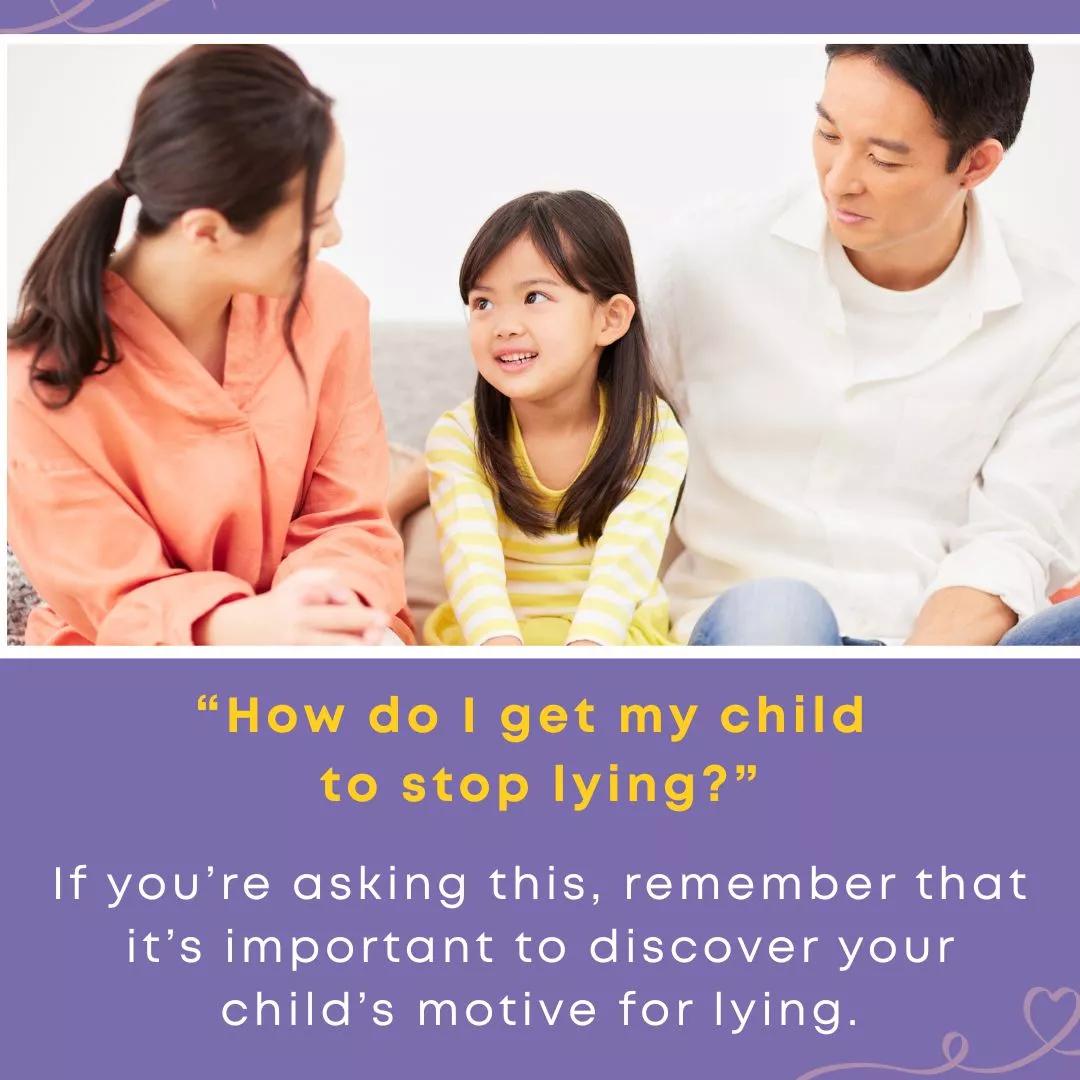
You might be asking, “How do I get my child to stop lying?” First, you need to determine what the motive for lying is.
1. Dishonesty to Avoid Getting in Trouble
If the motive is to avoid getting in trouble or disappointing, then you can remove this stressor as a parent. Also, do not give the child opportunities to continue to lie to you by asking the same questions over and over again. If you know your kid dumped the Cheerios in the toilet, just say, “Hey, Buddy, could you come and help me clean up these Cheerios?” In this way, you have dealt with the behavior and avoided the opportunity for a lie. If the child argues and starts to lie, just say, “Honey, it’s ok. When we make mistakes, we fix them. Mommy will help you. I am not mad at you. How can I help you fix this?”
2. Dishonesty to Inflate Their Sense of Self
If a child is lying to inflate his sense of self, then address that primarily. “It seems like you don’t feel like you are enough just as you are. Let’s talk about some things that I love about you that make you extra special. I can tell you really want to impress Jony. I wonder how Jony will feel when he finds out that was not the truth.” Help your children understand how these lies will impact their friendships, but also support them when their friends start pulling away. Encourage them to try to be honest just with one or two safe people and see how that goes.
3. Dishonesty as State-Dependent Lies
If your child is super upset and telling state-dependent lies, don’t take them personally, and don’t start to argue and try to prove them wrong. This is not the time to say, “How can you think this? We spend more money on you and more time on you than any of your siblings. If anything, you get more than anyone else in this family.” The best thing to do is to meet whatever physical needs they have first: food, hydration, rest, and physical comfort. After that, when your child is calm, let them know that problems always feel so much bigger when we are upset. That is why sometimes we have to wait to talk about things until we are calmer.

Summary
Both children and adults are dishonest at some point. The motive behind telling a lie might vary depending on the person and the reason for the lie. It is important that we understand why our children are telling lies. There are four main reasons that our kids might be telling lies: wanting to avoid getting in trouble or making someone upset, to make themselves feel better, because they are disregulated, or because they want to get someone else in trouble. Determining their motivation for the lie will help us to correct the behavior, respond appropriately, and guide them toward telling the truth going forward.
©2025 Dr. Melody Aguayo. Used with Permission.