“Even the sparrow has found a home, and the swallow a nest for herself, where she may have her young—a place near your altar, Lord Almighty, my King and my God.” Psalm 84:3
Key Takeaways
- Teachers can help students in foster care feel seen by creating safe and stable environments.
- Recognizing the unique challenges foster youth face, such as frequent school changes and academic setbacks, is crucial.
- Building transformational relationships is key; presence, awareness, and fostering students’ desire to grow matter the most.
- The P.L.A.Y. framework (Presence, Learning Process, Awareness, Yearning) guides educators in supporting children in foster care effectively.
- Every classroom can become a nurturing space where foster children feel they belong and can thrive.
The Sparrow and the Child in Foster Care
How can teachers help students in foster care find a “home” where they feel seen and understood? Psalm 84:3 says, “Even a sparrow finds a home…” Is this true for a child in foster care?
Is it true for:
- the foster youth who changes schools an average of seven to eight times before the age of eighteen?
- the child who may be set back academically four to six months with every single school move—not once, but again and again?
- the child for whom only fifty percent of their peers will graduate high school on time, compared to eighty-five percent of the general population?
- the foster youth who is more than twice as likely to carry an identified disability or special education need?
Educational Gaps for Children in Foster Care
Research paints a clear picture of the educational gaps children in the foster care system face. We see the need. We know the need.
The House Sparrow is, in many ways, the most overlooked bird in the world. It is everywhere—in city gutters, school courtyards, fast-food parking lots, and window ledges. Its colors are modest: browns, grays, a streak of black. It does not dazzle. It does not announce itself. And yet there are more than a billion House Sparrows on Earth. Because it is common, we stop seeing it. We look past it toward the cardinal, the hawk, the hummingbird, birds that demand attention. The sparrow simply persists. It adapts. It finds the forgotten corner of the eave, and it builds there, from whatever is available.
Now consider a child in foster care entering a new school on a Tuesday in October. A new name in the attendance book. A new backpack, often given hastily. Eyes that have learned to read a room before they can fully read a book, because reading the room has been survival. Like the sparrow, this child has adapted. Like the sparrow, this child is often unseen, not because they are invisible but because we have trained ourselves not to look.
The sparrow was never meant to be overlooked. Neither was this child.
What God Sees That We Often Miss
The psalmist writing Psalm 84 was not writing a nature poem. He was writing a song of longing, a pilgrim’s ache for the house of God. And in the middle of that aching, he noticed something that many of us would miss entirely: The sparrow had found a nest. Near the altar. In the very dwelling place of the Lord.
Not the eagle. Not the dove. The sparrow, the common, unadorned, passed-over bird, had found its home in the holiest place. The psalmist does not express surprise. He expresses something closer to recognition: as if the sparrow’s belonging near the altar was evidence of grace, not accident.
“Are not two sparrows sold for a penny? Yet not one of them will fall to the ground outside your Father’s care. So don’t be afraid; you are worth more than many sparrows.” Matthew 10:29, 31
Jesus, speaking to his disciples about the cost of following him, reached for the sparrow as his measure of God’s attention. Not its beauty. Not its market value, two for a penny. Its value lay entirely in the fact that the Father knew it. Counted it. Refused to let it fall unnoticed.
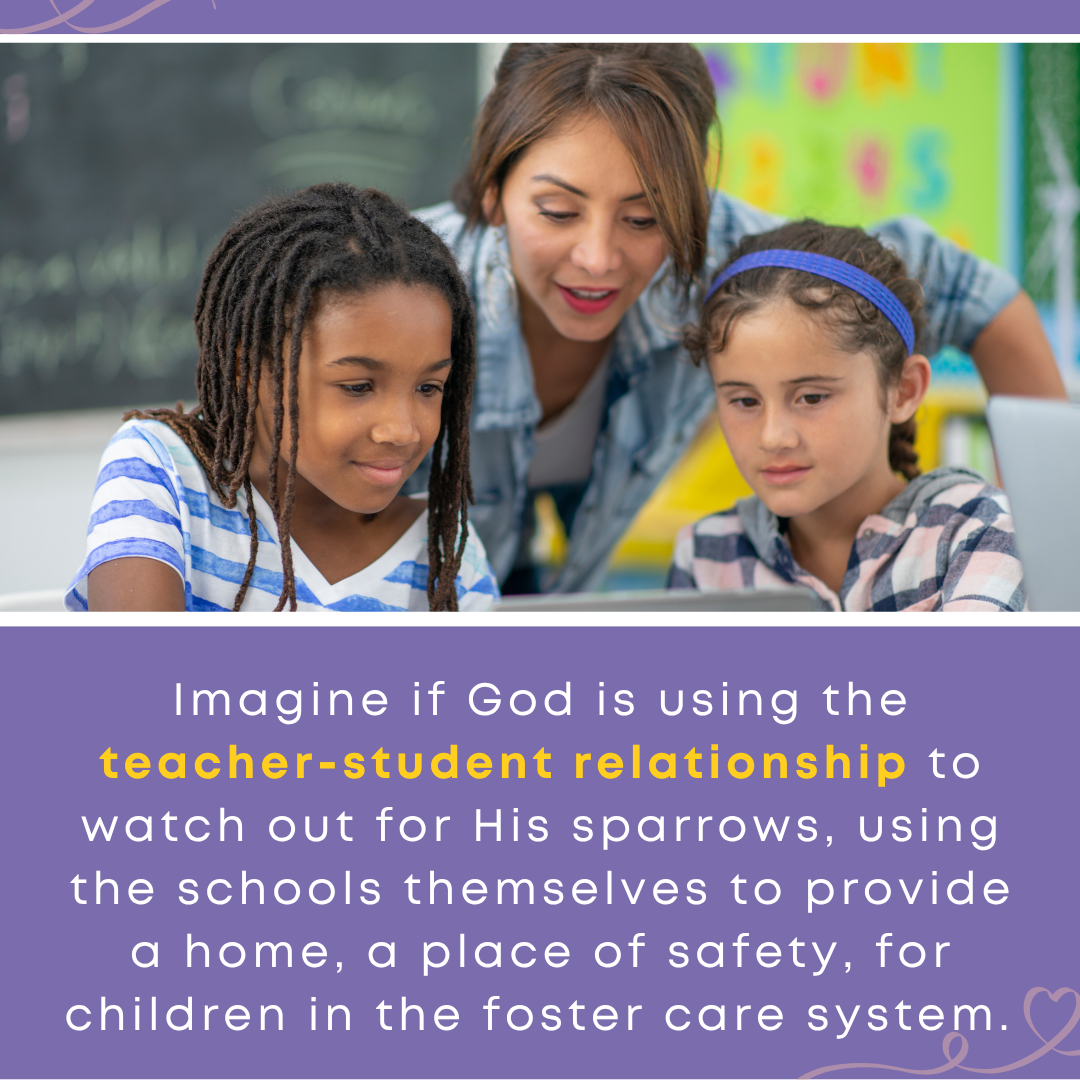
This is the theological ground on which all foster care advocacy must stand: every child who has been removed from the home they were born into is known. Counted. Not one of them falls outside the Father’s care. Imagine if God is using the teacher-student relationship to watch out for His sparrows, using the schools themselves to provide a home, a place of safety, for children in the foster care system. The task before us is to embody that awareness in the classroom: to be what scripture promises God is in the cosmos, a Presence that notices.
Beyond the Magic Pill: Relationship as the Answer
As educators sit together and wrestle with these realities, there is a shared longing for a magic pill, something that makes all the gaps, all the pain, all the fear, all the loneliness go away. We look for just the right system, the perfect lesson, the formula that meets our students where they are.
We toss around a lot of “shoulds” and “laws” as motivation. But are the shoulds and laws really the answer to fixing the problem? Rules and laws give us direction, yes. They establish thresholds. They create accountability. But imagine for a moment a different world, a world where you are surrounded by people, by teachers who see you, know you, and love you, no matter who you are or where you come from.
“Everyone comes into this world looking for someone looking for them.” — Dr. Curt Thompson, Anatomy of the Soul.
Dr. Curt Thompson, in his landmark work Anatomy of the Soul, draws on attachment theory to make a claim that cuts to the heart of every foster child’s unspoken need: everyone comes into this world looking for someone looking for them. The foster child who has moved seven times and changed schools eight times is not primarily looking for a better reading program. They are looking for someone who is looking for them.
How Can Teachers Help Students Feel Seen?
What if the teacher-student relationship were one of transformation? What if that is precisely where God is at work, using ordinary classrooms and ordinary teachers to become the extraordinary, stable presence that a child in care has never been able to count on? The altar, Psalm 84 reminds us, is where the sparrow finds its home. The classroom can be an altar. The teacher can be its keeper.
The statistics are not abstract. Every number represents a child sitting in a real desk, in a real classroom, carrying a real history. A child in foster care who changes schools an average of seven to eight times before aging out loses four to six months of academic progress with every transition, credits lost, friendships broken, unfamiliar routines, new teachers who do not yet know their names. Over the arc of childhood, cumulative loss is staggering.
How Teachers Can Help: Understanding The Impact of Trauma
Trauma, which is nearly universal among children who have experienced removal and placement, does not simply affect behavior. It reshapes the architecture of the developing brain. The prefrontal cortex, the seat of planning, impulse control, and trust, develops more slowly in children who have experienced chronic adversity. What looks like defiance is often hypervigilance. What looks like apathy is often the protective numbness of a child who has learned that caring about something is a risk.
And yet, and this is the grace that educators must hold, children in foster care are also among the most resilient human beings on earth. They have survived a disruption that would undo most adults. Beneath the surface of their struggles is an extraordinary capacity to connect, to grow, to soar, when someone creates the right conditions. The sparrow builds its nest in the margins. But given a reliable eave, it returns, season after season, and it thrives.
- Foster children change schools an average of 7–8 times before age 18.
- Each school move can set a child back 4–6 months academically.
- Only ~50% of foster youth graduate high school on time, vs. 85% of their peers.
- Foster youth are more than twice as likely to have an identified disability or special education need.
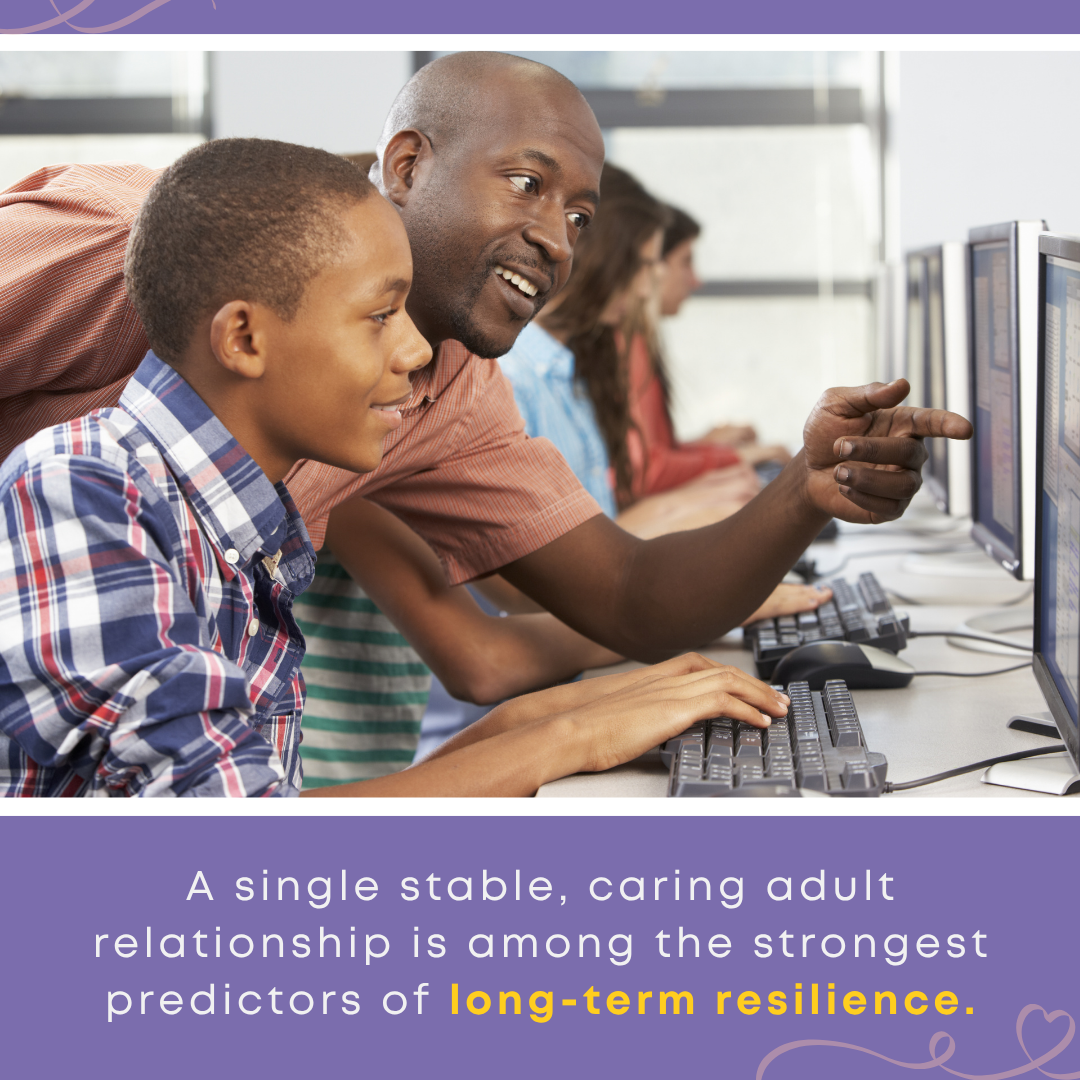
- A single stable, caring adult relationship is among the strongest predictors of long-term resilience.
That last point deserves to be read again slowly. The classroom may be the most consistent environment in a foster child’s week. Which means the teacher is, functionally, what the altar was to the sparrow, the one fixed place. The place near which a nest might finally be built. The one adult who is looking for them.
Transactional Teachers vs. Transformational Teachers
There is a difference between a transactional teacher and a transformational one. A transactional teacher delivers content, assesses understanding, and moves on to the next standard. This is not without value. But it is not sufficient for the child in the fourth desk who has moved three times this year and whose name the substitute yesterday pronounced wrong.
A transformational teacher understands that the relationship is the curriculum, at least for this child, at least right now. Research in developmental psychology and trauma-informed education converges on a singular finding: learning cannot occur where safety is absent. A child whose nervous system is scanning the room for threat cannot engage the frontal lobe for reading comprehension or mathematical reasoning. Safety comes first. Relationship creates safety.
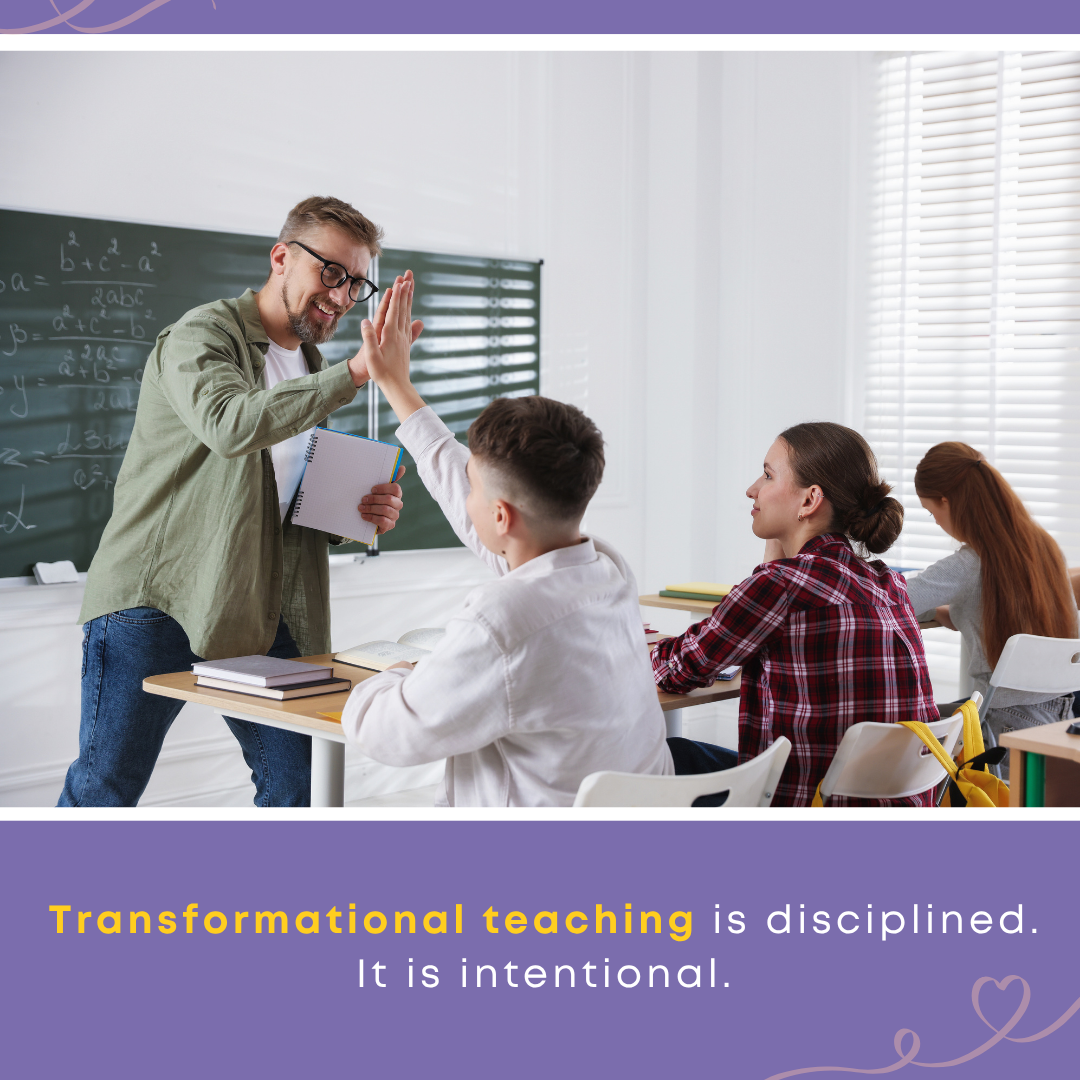
But transformation does not happen by accident or sentiment alone. It is not simply a matter of being warm. Warmth without wisdom can become enabling. Compassion without structure can feel like chaos to a child who desperately needs predictability. Transformational teaching is disciplined. It is intentional. It is, in the deepest sense, a practiced craft.
How Can Teachers Help Students in Foster Care with The P.L.A.Y. Framework?
Relationship is the curriculum, and it requires the same preparation, reflection, and craft as any lesson plan.
Strategic intentionality means the teacher has made a decision, before the child arrives, to pursue connection. It means learning the child’s history without being defined by it. Also, it means noticing the small moments, the quiet morning, the hesitant smile, the drawing left on a desk, and treating them as data, as invitations. It means building rituals of belonging: the consistent greeting at the door, the remembered detail, the homework folder handled privately rather than announced to the class.
It means building a nest. Not through a dramatic intervention, but through the steady, patient gathering of twigs and threads. The sparrow does not build its home in a day, and neither does trust. But with strategic intentionality, with the daily, deliberate act of showing up as someone who is looking for this child, the nest takes shape.
The P.L.A.Y. framework offers educators a four-dimensional map for building transformational relationships with children in foster care, and with any child who arrives at school carrying more than a backpack. It is not a program. It is an orientation, a way of positioning oneself in relation to a child, structured around four irreducible commitments.
P – Presence: Show Up Fully, Consistently, and Without Agenda
The sparrow does not build its nest near a moving target. It builds near the altar because the altar is there, reliably, day after day. A foster child, whose earliest experience of adults may be of people who arrived and left, promised and disappeared, is watching, constantly, for evidence that you will stay.
Presence is not proximity. You can stand physically in front of a child while being emotionally absent, distracted by data systems and behavioral management, and the hundred other demands of a classroom. True presence is an attuned presence. It is the teacher who notices the look on a face before it becomes a behavior. It is the five-second moment at the door: not “good morning” to the room, but “good morning, Marcus” with eye contact and genuine attention.
For the child who has never been fully seen, being seen is, in itself, a healing act. Presence is the foundation of every other element of the framework. Without it, the rest is technique without soul.
L – Learning Process: Follow the Child’s Lead In How and Whether They Are Ready To Learn
The House Sparrow does not try to nest in a habitat that cannot sustain it. It reads the environment first and responds accordingly. Educators working with children in foster care must develop the same ecological intelligence, reading the child’s readiness, not just their grade level.
The learning process for a traumatized child is not linear. Some days, the learning process is simply learning that this classroom is safe to return to. Some weeks, it is mastering the regulation of emotion enough to sit through a lesson without fleeing or fighting. These are not failures of education; they are the education. They are the prerequisites for every academic skill that follows.
Strategic intentionality in the learning process means differentiating not just for academic ability but for developmental and emotional readiness. It means knowing when to push and when to hold. It means celebrating the non-academic wins: the child who asked for help instead of giving up, the child who sat through the entire class for the first time, the child who let you know they were struggling.
A – Awareness: Know This Child—Their History, Gifts, and Signals
God, Jesus tells us, is aware of every sparrow. Not in aggregate. Each one. The Father’s awareness is particular, and that particularity is what the transformational teacher strives to embody.
Awareness begins before the child arrives: reading the file not to form a verdict but to understand the landscape. It deepens through observation over time.
- What does this child do when overwhelmed?
- What does joy look like on their face?
- What subject makes them lean forward?
- What kind of feedback makes them shut down, and what kind opens them up?
Awareness means being alert to the gaps, the things that look like indifference but are grief, the eye-rolls that are fear, the absences that are chaos at home. It is the discipline of asking, over and over: what is this child telling me? It is the refusal to collapse a child’s complexity into a label, a behavior plan, or a diagnosis.
Y – Yearning For More: Awaken and Protect the Child’s Own God-Given Desire To Grow
The sparrow was not made to cower in the eaves forever. It was made to fly. The nest is not the destination; it is the launch site. And one of the most profound things a teacher can do for a child in foster care is to protect, and then ignite, their own sense that they are going somewhere.
Yearning for more is the intrinsic motivation, the God-given curiosity, that every child is born with and that trauma can but does not have to extinguish. The transformational teacher finds the ember. It may be small. It may be buried. But it is there.
It might be a child who draws constantly in the margins of worksheets and the teacher who says, quietly after class, “I notice you draw. Have you ever thought about what kind of person makes art for a living?” It might be the child who asks a strange, sideways question during a science lesson and the teacher who says, “That’s the kind of question scientists ask. Hold onto that.” Yearning for more is not about pushing a child toward a particular future. It is about restoring their sense that they have one. It is the teacher saying, through every act of attentive relationship: you are not just surviving. You are becoming.
How Teachers Can Help Students In Foster Care Belong
Psalm 84:3 tells us that the sparrow found its home near the altar, near the place of meeting between the human and the holy. The psalmist is making a theological claim: the place of God’s dwelling is the place of safety for the vulnerable. The most sacred space becomes the nest.
Educators are not priests. But they can be altar-builders. They can create, within the ordinary architecture of a classroom, a space of such consistent welcome and attentive care that the wandering, displaced child the one who has been in three homes this year finds, here, something that feels like ground. Like belonging. Like home.
This does not require extraordinary resources. It does not require a new system or the perfect formula. Instead, it requires presence, attentiveness to the learning process, the kind of awareness that sees each child as a particular, irreplaceable person, and the willingness to stoke the yearning for more. It requires the decision, made fresh each morning before the students arrive, to be the kind of place where sparrows can build nests.
“How lovely is your dwelling place, Lord Almighty! My soul yearns, even faints, for the courts of the Lord.” Psalm 84:1–2
Be a Transformational Teacher
The psalmist yearns for what the sparrow has already found: a home near God. The transformational teacher’s deepest calling is to create, within the ordinary school day, a foretaste of that dwelling: a place where the most overlooked among us discovers that they have always been known. They have always been counted. Always been worth far more than two pennies. Always been seen by Someone who was looking.
The House Sparrow does not wait for perfect conditions to build. The sparrow gathers what is available, a strand of grass, a scrap of thread, a forgotten piece of string, and it constructs, in the margin of the human world, a place of belonging. It is not glamorous work. It is not celebrated work. But it is faithful work. And it is life-sustaining work.
So too with the educator who chooses, each day, to be a transformational presence for children who have known too much instability and not enough witness to their own worth. This is not the work that makes headlines. It is the daily practice of being present, of attending to the learning process, of cultivating deep awareness, and of protecting the yearning for more in a child who may have nearly given it up.
It is the work of the altar-builder. And scripture is clear: where the altar is faithfully tended, even the sparrow finds a home.
Even a sparrow finds a home. May every classroom be such a place.
Summary
Even a sparrow finds a home—and so can every child in foster care who walks through a classroom door. The question of how teachers can help students in foster care was never about finding a perfect program or the right formula. It is about presence, awareness, and the daily, unglamorous work of building a nest one thread at a time. When a teacher chooses to notice, to stay, and to protect a child’s yearning for more, the classroom becomes what the altar was to the sparrow: the one fixed place where a wandering child can finally rest.
©2026 Dr. Ann Maura Hinton. Used with Permission.