
My husband and I started our foster care journey 18 years ago, as naïve as could be. One of the greatest challenges we faced had nothing to do with the system at all, but rather how our personal lives were impacted. Both aged 23, we went from being young people without kids to caring for four kids overnight.
Our friends didn’t know how to respond. Most of them didn’t have kids, and if they did, it was one sweet babe who didn’t have any early childhood trauma. I didn’t even know how to ask my friends for help because I truly didn’t know what I needed. Before sitting down to write this article, I polled a few hundred of my friends (all engaged with foster care at some level) and asked what they wished people knew, what they think the needs truly are. So, here it is, from not just one caregiver, but many.
Key Takeaways
- Lead with love, not judgment.
- Treat every child in the home as family, always.
- Meals and laundry are the most practical gifts you can offer.
- Share resources and skills you already have.
- Ask what they need — then keep showing up even if they don’t respond.
- Above all else, pray.
Seven Ways You Can Help Foster Families
Here are seven ways you can help foster families, from the families themselves.
1. Lead with Love
Lead with love, not judgment. Avoid asking questions about why a child is in care, and try not to make judgments about the natural parents. There are many reasons a child goes into care. Most caregivers need to feel seen and heard. Showing up with a cup of coffee and a listening ear can be the best gift you can give! Before a caregiver allows you to help in any of the following areas, they will need to know that their kids and their stories will be safe with you.

2. Treat a Child Like Family
Treat a child in care as though they will be there forever, even when the goal is reunification. Initially, when a child enters the foster care system, the goal is almost always reunification, but when a child knows they are only “temporary,” they have a hard time attaching. Continue talking about and praying for their family of origin while also making future plans with that child: get them a stocking, include them in family photos, and make sure they know they belong. If you are supporting a foster family, make sure that when any children are in earshot, you are not alluding to them as though they aren’t part of the family. Especially at large, extended family gatherings. It is very painful for a caregiver and a child in care if they see other children in the extended family as accepted when they are not.
3. Hands-On Help
Any caregiver knows how hard it can be to keep up with daily tasks when adjusting to a new baby. Imagine when that new “baby” is three and can run all over. They make a mess faster than you can clean up, eat almost as much as an adult, have very high needs, and on top of all that, you might just be learning how to parent for the first time.
Two of the most practical ways to offer support, which almost every caregiver repeated, are meals and laundry. Meals feel a little more obvious. Dropping off a meal to anyone in need is such a gift. To care for someone by filling their belly is a beautiful thing. I would note that bringing disposable cookware or items that don’t need to be returned is an even greater gift! And the icing on the cake, bring disposable dishes too! Not having to do dishes after eating a dinner you didn’t cook? Gold! Now let’s talk laundry. Most of us don’t even like doing our own laundry, but for a foster parent, the bottom of the laundry mountain is seldom seen. Offer a caregiver a helping hand and conversation while working through the laundry pile? That’s double the gift while hiking to the bottom of Mount Washmore.
4. Share Resources
If you have just gone through your child’s clothing, instead of dropping them off at a resale shop, see if there is a foster family in your community that could use those sizes. Are you stellar at hair care or skin care? Many children in care are placed into a home with a caregiver of a different ethnic background than their own. When a child enters foster care, they often also lose access to their community and representation. What a great way to meet the needs of the child and the caregiver by providing practical help in this way.
5. Be a Supportive Adult
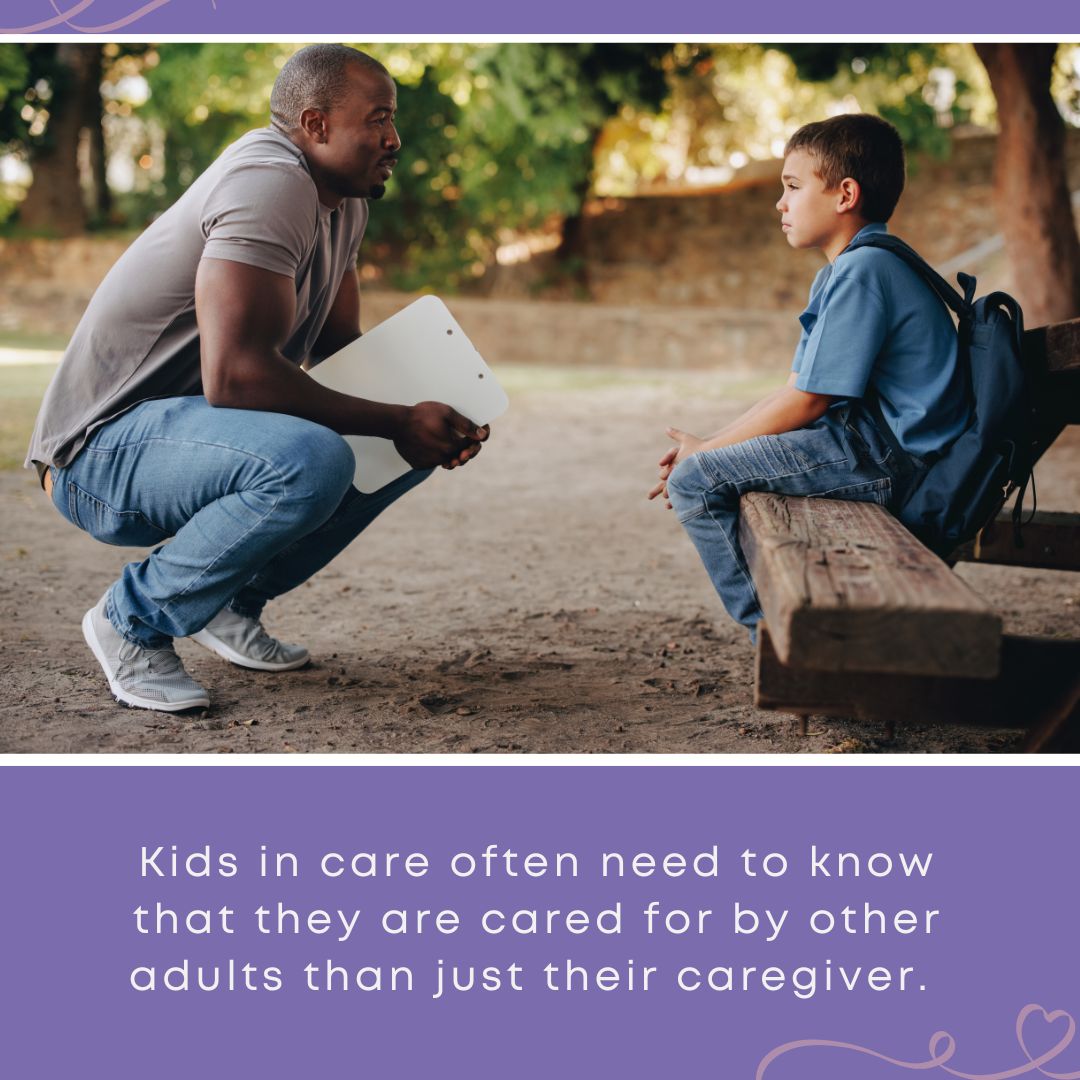
Kids in care often need to know that they are cared for by other adults than just their caregiver. Offer mentoring, homework help, tossing a ball, or teaching a new skill. This not only gives the caregiver a break but fills a real need. I recently had a single mom caregiver ask me if there were any male volunteers who could meet them at the park to toss a ball with her placement. He was longing for male mentorship, and she wasn’t able to give that to him. It doesn’t cost anything but time to throw a ball with a kid, but to that child, it’s a priceless gift. When it comes to homework help, many of us are trying to help our kids with a type of math we didn’t learn. If you’re a young person who knows “new” math, I promise a caregiver would love your help!
6. Become a CASA Volunteer
Often, a foster parent does not have the ability to speak directly to the judge on their placement’s case, but a CASA gets to report to the judge exactly what they see happening and what they feel is best for the child. To become a CASA worker, there is extensive training because it is a serious commitment. However, it is very impactful to the case and the outcomes for the child in care.
7. Ask What They Need
This might seem counterproductive to this entire article, but asking what a foster parent needs is really important. Dropping off a meal to a home with a child who has extreme food allergies is only helpful if you know what those allergies are. If a friend of yours has a child placed with them through foster care, give them a call or a text. You can say, “I’m available all day on Tuesday. I’m happy to bring over coffee, help with laundry, keep an eye on the kids while you shower, or whatever you need. If those options aren’t helpful, please give me a specific task.” And if they don’t respond, drop off a gift card and a handwritten note saying you’ll be reaching out again in a few weeks if you don’t hear back from them.
The Most Important Way to Help Foster Families
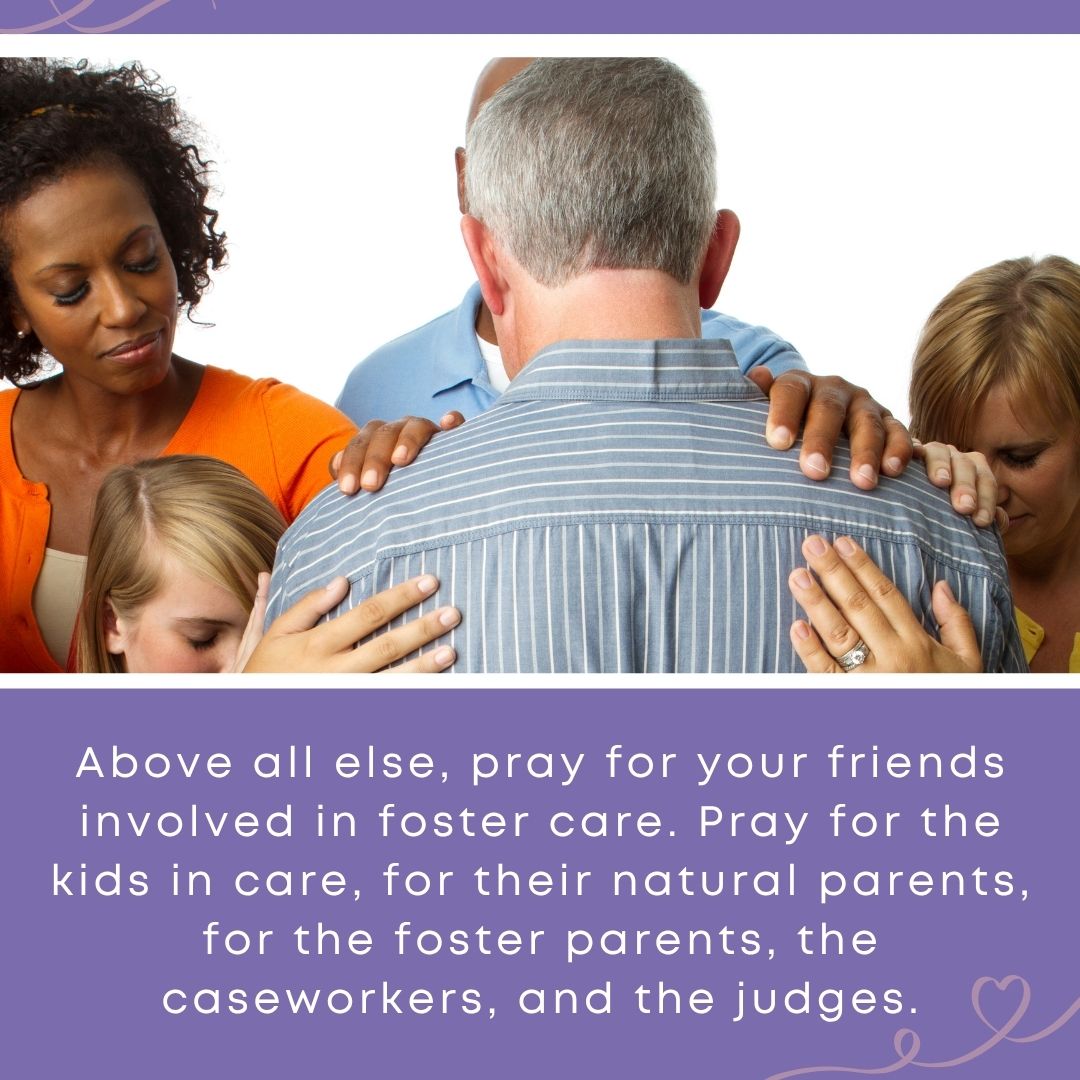
Above all else, the most important way to help foster families is to pray for your friends involved in foster care. Pray for the kids in care, pray for their natural parents, pray for the foster parents, the caseworkers, and the judges. In a perfect world, foster care wouldn’t exist. Sadly, we live in a fallen world filled with sin, and it’s our job to be the hands and feet of Jesus to a hurting world. If there was one thing I could tell my 23-year-old self, it would be, “Buckle up. This is about to be the ride of your life. It’s the hardest thing you will ever do, and Jesus will be proud of you every step of the way.” So, go buy a foster parent a cup of coffee and sit with them. I promise you, they need it.
Summary of Ways to Help Foster Families
Supporting a foster family doesn’t require a special title, a large budget, or a perfectly worded speech. It requires showing up — consistently, humbly, and with open hands. Whether you’re dropping off a hot meal, folding a load of laundry, tossing a ball with a lonely kid, or simply sitting across the table with a cup of coffee, you are doing kingdom work. Foster families were never meant to walk this road alone, and neither were the children in their care. So look around you. Chances are, there’s a family nearby who needs exactly what you already have to give.
©2026 Carly Souza. Used with Permission.