
I will never forget my first “hard day” of foster care. Emotions were running high for everyone, and I truly felt like I would miss God’s plan. Sensations of grief, hurt, and pain flooded our home. It felt nothing like a refuge or a place of peace. I felt lost and alone.
I learned quickly that the thought of finding “purpose” can feel miles away. That was especially true on the tough days—the ones where you just want to throw in the towel, or the times you’ve self-proclaimed that you stink at this—you know the moments! However, if we stay in the state of feeling overwhelmed and inadequate, we will stay stuck.
Key Takeaways:
- You’re not alone. Lean on a co-laborer, agency worker, or support group.
- Redefine success. Measure your consistency and calm, not behavior or speed of attachment.
- Connection before correction. Stay close, soften your tone, and repair ruptures.
- You’re not the fixer. Be faithful and present. Don’t try to rewrite their story.
- Remember the bigger story. God is doing the work, even when it doesn’t feel true.

How to Carry the Weight of Hard Days in Foster Care
Many foster parents, like me, are not just tired on hard days, but are wondering whether we are failing. Many of us carry shame.
Before we go any further, know that you were never meant to carry the weight of foster care alone. Hard days are not just a cue to press in with our own child, but also to reach out for wise support. An amazing devotional resource early on in my journey by Pam Parish, titled “Battle-Weary Parents: 30-Day Discovery for Parents in Crisis (Ready or Not),” proved to be water to my soul.
Support is best given by people who are familiar with all that foster care entails—a co-laborer, an agency worker, or a support group. It is here that you will immediately not feel alone, because you’ll be in company with those who are journeying right along with you. That will act as a breath of fresh air; you’ll be able to begin again.
3 Essential Anchors for Hard Days in Foster Care
There are three essential anchors in our lives that will help us stay grounded in our journey, bring peace, and encourage us with a newfound hope. Remember that an anchor may not change our circumstances or situation, but it will hold us closely to our heavenly Father, who equips us with wisdom and grace in the middle of storms.
1) Measuring Success
First off, the hard days exist because we’ve incorrectly measured what “success” is. We’ve focused on the things we see: The behaviors, lack of gratitude, and, a prevalent one, the speed of attachment. If this is how we are measuring our success, we will continue to feel defeated and discouraged. Success can be measured as we effectively answer and think about questions like:
- “Did I stay consistent?”
- “Was I regulated in their dysregulation?”
- “Did I offer safety, even if it was rejected?”
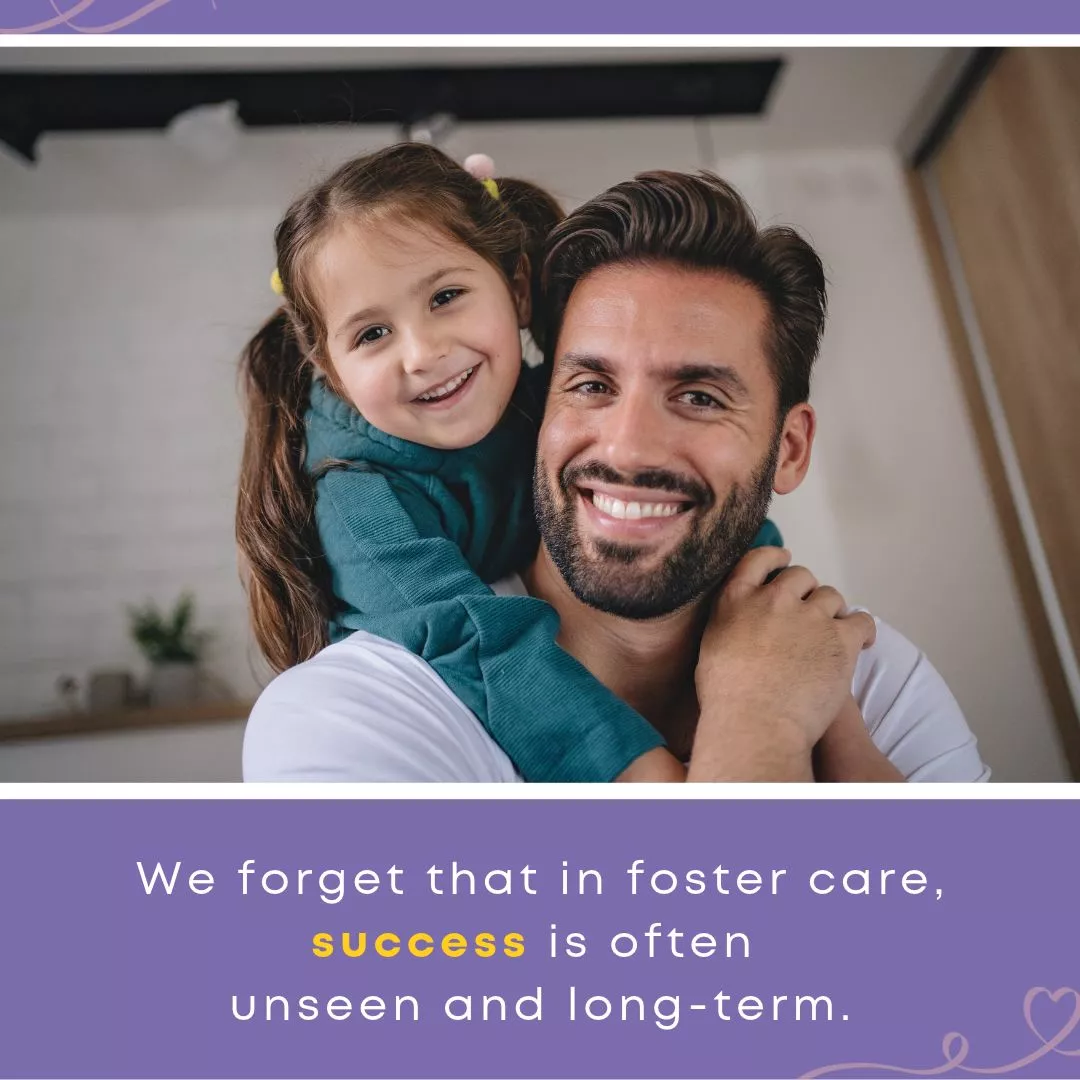
We forget that in foster care, success is often unseen and long-term. Often, our role is focused on planting seeds rather than on results. This first anchor helps us to reframe what winning looks like. And if you notice, it has everything to do with us and very little with our child. We must start with us, our response, and our right reactions. That sets us up to succeed and bring calm.
2) Connection
The second anchor is connection. Connection in foster care is the secret sauce. Kiddos coming into our homes were harmed in relationship and will only be healed in relationship. Our relationship. When we find our kids dysregulated, pushing limits, or even rejecting us, we may slip into demanding compliance, using control and correction. Purpose is found in connection with correction.
Keep in mind that small moments matter. Stay close in proximity instead of demanding engagement. When we are tempted to raise our voice, we should use a soft tone. And a fantastic practice, if a rupture in your relationship has occurred, is to practice the art of repair. It is in the repair that a connection can be formed and new beginnings imagined, which builds hope for the future. When we apply this anchor, it helps us better define our role as a caretaker, which both creates safety and makes us a safe person, and we move from the idea that we are the fixer of all things. That we are not!
3) Remember the Bigger Story
The third anchor is to remember the bigger story. Foster care is spiritual, emotional, and generational work. On hard days, you need something much larger than just the moment. James 1:27 helps us stay grounded: “Religion that God our Father accepts as pure and faultless is this: to look after orphans and widows in distress.” This verse helps us see that it is not an easy task; it speaks of distress. It also acknowledges that, as believers, we are stepping into the broken places that Jesus cares deeply about. But notice, looking after doesn’t mean fixing everything. We are called to be faithful and present. We are not called to rewrite their story. We see this in Psalm 68:5-6, “A father to the fatherless, a defender of widows is God in his holy dwelling. God sets the lonely in families.”
God is the one doing the work; we are joining Him. Even when it feels chaotic and disconnected, our homes are still part of the answer to their loss and loneliness. That is a truth that holds even on days when it doesn’t feel true. The days when your home feels like a battlefield, God is still at work.
A Prayer for Hard Days in Foster Care
The temptation is to give up! Don’t give up on this sacred work. You are God’s plan for the children He’s placed in your home for this moment in time. Pray this prayer on the hard days. May it rejuvenate you in your calling and mission, for such a time as this!
God, you see the struggle and even heartache.
When I am tired, be my strength.
When I feel like I can’t keep going, be my sustainer.
And when I don’t see progress, help me to know You are always at work.
I trust you with the calling you’ve placed on my life to bring hope and healing to kids from hard places.
In Jesus’ name, Amen.
With Jesus by our side, He will create beauty from ashes.

Summary
Hard days in foster care can leave us feeling ashamed and wondering if we’re failing, but you were never meant to carry this alone. Reach out for support, and hold on to three anchors: measure success by your own consistency and calm rather than by behavior, put connection ahead of correction, and remember that God is the one doing the work while we simply stay faithful and present. Even on the days when your home feels like a battlefield, He is still at work, creating beauty from ashes.
©2026 Angie Grant. Used with Permission.